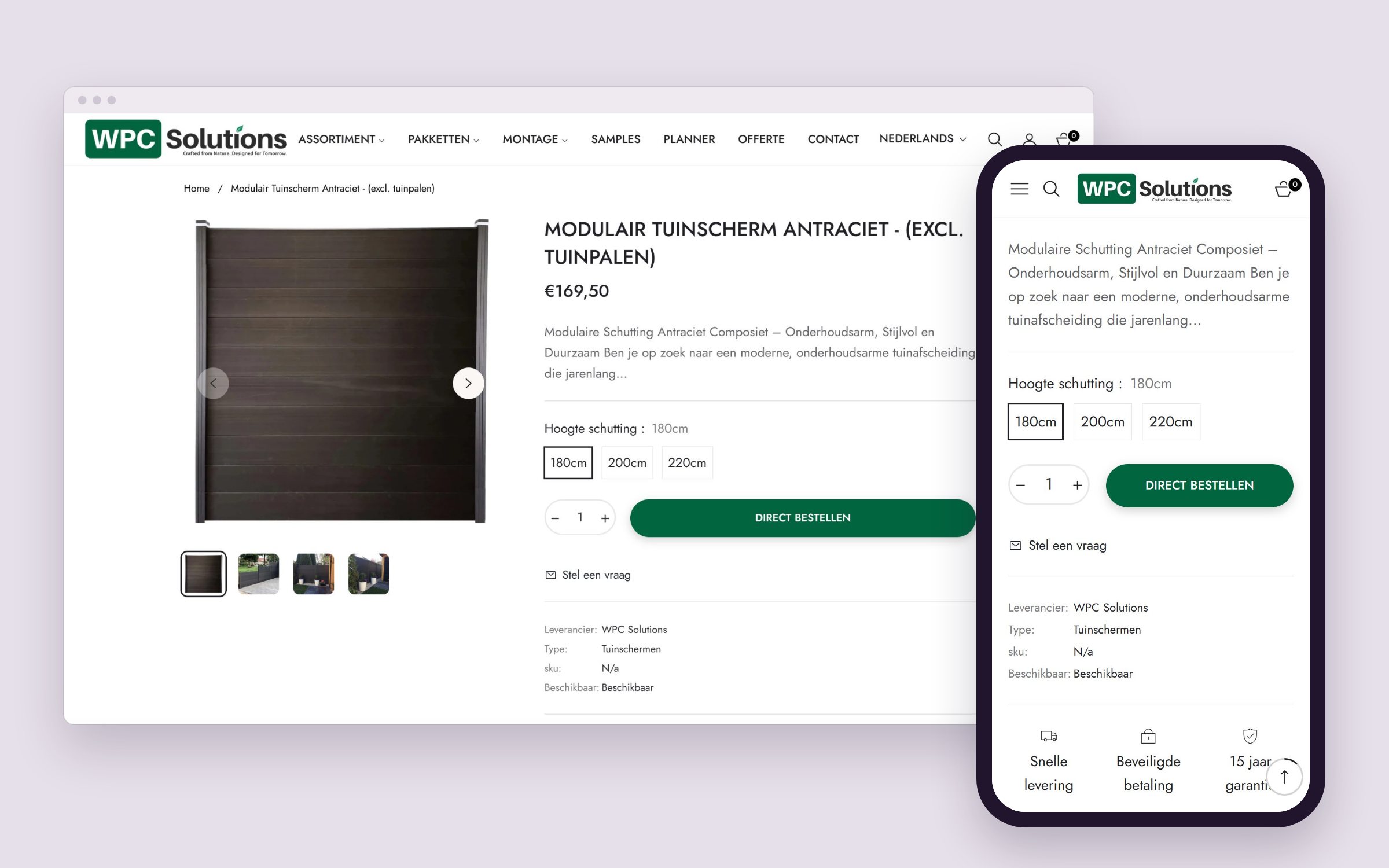
An online store is more than a site with a shopping cart
This page is for those who want to start selling online, or have a online shop that no longer fits the range or how they work. Customers can’t find the right product, or behind the scenes, orders, inventory and shipping information are transferred manually from one system to another.
In addition to the design, a online shop involves payment, shipping, returns, product information and links. They help determine which platform is suitable. That is why we only choose the platform once it is clear what your range and processing look like.
Four routes to a online shop
Each platform has its own page with what it can and cannot do. Here is a brief overview of when to consider which one.
Shopify
A online shop platform with its own management, a checkout and an App Store full of extensions. For those who mainly want to sell and manage the store themselves. What you can change at checkout depends on your subscription.
WooCommerce
A plug-in that turns a WordPress site into an online store. For those who want content and store in one management, or already have a WordPress site. You can arrange hosting and maintenance yourself or with us.
Webflow
Webflow has its own e-commerce subscription, with a limit to the number of products and variants per subscription. For a smaller store within a Webflow site.
Framer with a Shopify store
Framer does not have its own online shop. Third-party plugins can link a Shopify store to a Framer site; Checkout, inventory and orders then remain in Shopify.
Read more per platform
Have a Shopify online shop created. Design, theme, collections and the apps your store really needs.
Have a WooCommerce online shop created. An online store within your WordPress site.
Have a Webflow website created. CMS, e-commerce and the limits per subscription.
Have a Framer website created. Brand-oriented sites, and what Framer doesn’t do itself.
What needs to be arranged in addition to the design
These components determine whether an order ends up in your accounting without any manual work from the customer.
Payment and settlement
Which payment methods you offer and who provides them. The amount you can change at the checkout varies per platform and sometimes per subscription. We do not promise unlimited customization; what is possible is stated in advance in the proposal.
Shipping and returns
Shipping methods and costs, labels, track and trace and how a customer returns something. This is often where most of the manual work is done after an order.
Product information
Titles, descriptions, photos, variants and filters. A product that you cannot find or do not understand will not be ordered. We will agree in advance who creates this content.
Links
Inventory, accounting and shipping prefer to run automatically. If a standard link exists, we will use it; if not, we’ll build one.